9/28/2012

Sick Day Reads.

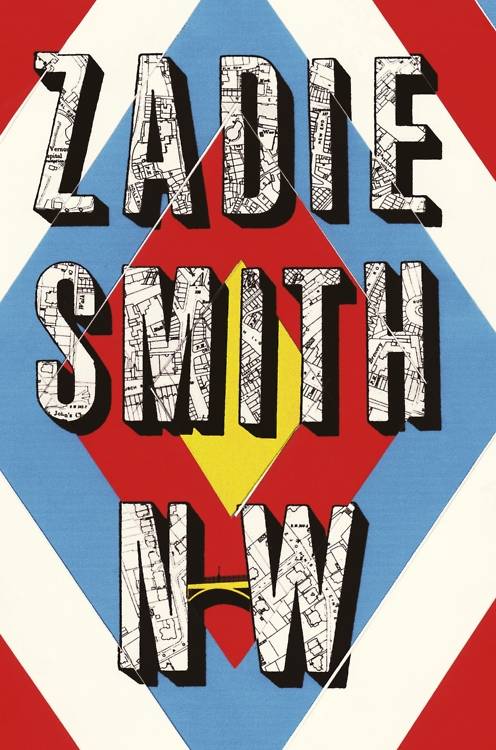
For the past week, I've been feeling fairly awful with the cold that seems to have swept everyone. After the stress of a dissertation hand-in, and then the further stress of getting a new job involving a big move, my immune system flipped me off and said, 'no more lady.' So I've been spending my days in bed with books (at the moment, Zadie Smith's NW which I've unleashed as a big treat to myself.)

Some books have the same effect as a big dose of Beecham's: clearing your head, giving you a little relief for a while. For me, its Dodie Smith's I Capture the Castle, which I first read at fourteen, and have read more times than I can count since. It's a great read in particular for teenage girls: I've tried to convince my sister to read it - the most frustrating endeavour of my life. The story is narrated by Cassandra Mortmain, seventeen at the start, who lives with her eccentric artisan family in a crumbling castle in Suffolk.

There's something so comforting about it: there's rain, there's numbing cold, there's a lot of sipping tea and snuggling into layers upon layers of clothes. Most of the novel is perpetual winter.  Eventually, towards the novel's conclusion, the cold melts away to spring. It's not quite wish fulfillment; its outlook is far too damp and bleak. But it's a beautiful snapshot of uncomfortable, chilly Britain, that perversely makes me feel better. Does that make sense?

In fact, I'm going to dig it out now. And if you're unlucky like me in suffering, snuggle down to your I Capture the Castle. I'd also suggest Scandinavian crime fiction, Snow Falling on Cedars by David Guterson and Kafka on the Shore by Haruki Murakami. 

What are your ill books?

9/18/2012

'Sea of Ink' - Review

An independent London-based publisher specialising in beautifully crafted translation novellas, Peirene Press's tagline reads 'Truly big stories in small packages.' Their newest offering, Sea of Ink by Swiss writer Richard Weihe more than delivers on this promise.

Detailing the artistic life of the celebrated Chinese painter and calligropher Bada Shanren in 106 pages and 10 of his most beautiful works, the novella opens with the political turmoil that accompanied the fall of the Ming Dynasty in the 17th century. The artist was born Zhu Da, Prince of the central-eastern city Yiyang. Following the invasion of rebel forces, he chose to seek the safety of life as a Taoist monk. During his time in the monastery, he honed his skill with ink and brush: and although he left that life behind, he remained rigorously devoted to the craft.

This story of royalty turned wandering artist is compelling in itself, but what makes this work so special and so lingering past the moment when you close it, is the way in which Weihe used his words to reflect Shanren's works. Both share qualities of ostensible simplicity; the starkness and conciseness of Weihe's prose cuts through the page like Shanren's strokes of ink: and yet similarly, the words like the paintings resonate with a wisdom and understanding of beauty that is utterly mesmeric. Shanren's work invites the viewer to 'colour' the images in its absence; much of the artist's power is in his ability to evoke what is visibly missing, and this novella is the perfect companion to its aesthetic. Unsurprisingly Weihe has a background in philosophy.

Bada Shanren, 'Catfish'
What struck me most about the novella, although it is a novel about art, is it equally a study of identity. Bada Shanren appears to shift and metamorphosize through every chapter, and not only in the various aliases he develops for himself. He is a consummate artist at core, but his other layers are complex and conflicting: a master of inner peace, an aesthete, a widower, a man who abandons his wife, a celebrity, a recluse.

I can't recommend this stunningly presented book enough. I read it in a very swift sitting, but got more pleasure and food for thought out of it than from many books four times its length.
Peirene approaches their literary findings as a curator of a gallery or museum exhibition, by publishing books in series according to specific themes. I'll be sure to pick up the related titles of the 'Small Epic: Unravelling Secrets' series to which Sea of Ink belongs.

If you'd like to know more about Peirene press, visit their website. They do a year's subscription offer which entitles you to three handpicked titles from their back catalogue. Guess where I'm doing my xmas gift shopping...

Small update: find out what's next to be published by Peirene here. 

9/11/2012

The Booker Shortlist 2012


In case you haven't heard, the Booker Shortlist 2012 has been announced today, and looks like this:
  • Tan Twan Eng - The Garden Of Evening Mists (Myrmidon Books)
  • Deborah Levy - Swimming Home (And Other Stories/Faber & Faber)
  • Hilary Mantel - Bring Up The Bodies (Fourth Estate)
  • Alison Moore - The Lighthouse (Salt)
  • Will Self - Umbrella (Bloomsbury)
  • Jeet Thayil - Narcopolis (Faber & Faber
It must be an exciting day for Hilary Mantel, who is a favourite to take the prize, which will make her the first Brit to win twice - an amazing achievement considering her last win for Wolf Hall is still so fresh in people's minds.Thayil and Moore are both nominated for their fiction debuts, which gives weight to the judges claim that this year is all about the novel rather the novelists: it really seems that they're concentrating on delivering a result that prioritises the work above reputation. I'll admit I haven't got around to really any of the novels either long or shortlisted; but I'm really keen to read Narcopolis and The Garden of Evening Mists.

Any thoughts? Has anyone read any of the titles? Are they worthy candidates for Book of the Year?

9/09/2012

Links of the Week

Worth reading online this week: 


  • Oracle to teenage girls around the globe (including me), YA fiction maestro Judy Blume has been diagnosed with breast cancer, and wrote on her blog about it with dignity, grace, and good humour.


Happy reading! 

9/05/2012

Norwich: Book City

I promise this post wasn't sponsored by the Norwich Tourist board or whatever. I spent 3 good years living and studying in Norwich, most famous for Colman's mustard, Alan Partridge and being 'A FINE CITY' (Stephen Fy). For those unfamiliar with the city, it's well worth a day or weekend trip: it has really great food and bars (but fairly horrible clubs), excellent live music, and is brilliant for Vintage - there's a really good trail of shops running from the city centre to Magdelen Street...
Off piste! Sorry. It's really great for books. 

The Book Hive on London St
As well as being the stomping ground of great writers, it's amazing for buying books. My favourite bookshop in the world (apart from Barter Books in Alnick, Northumberland, which deserves and may get its own post) is the Book Hive on London St. It's an amazing space, where you can just tell that each book is lovingly placed and ordered and spotlighted for very good reasons. 

When I lived there I spent ages looking at the displays and finding books that the staff had obviously read and loved and wanted to share. They have a fantastic array of art books, and a GREAT upstairs for proper fiction that makes you feel clever. They often have readings and events on from one of the numerous Norfolk-based creatives. (And it's parallel to my favourite bar in the city, Frank's Bar, which does a Shakshuka I still dream about...) You'll definitely find something brilliant to take home by a homegrown talent. The staff are the business too, and clearly love to read, so ask for their recommendations or what they've been reading lately. 

Well worth your time as a book lover in Norwich is trawling through the innumerable charity shops. The indisputable King is Oxfam Books on Bedford St, (Oh! Coincidently on the same street as Frank's!) which boasts a big fiction section, loads of sheet music and a good range of retro comics. The staff are (usually) friendly and helpful, and if you sweet talk them will go a-hunting through the sacred upstairs to find more obscure texts if you like. Another good bet is the Oxfam on Magdalen St, which has furniture, so if you fancy a big creaky reading chair to sip whisky and read Proust on, you're sorted. It's a favourite location for students to do their end of year book drop, so expect lit criticism, philosophy tomes and history books pencilled with notes of desperation and despair. Just how I like my secondhand books. 

So if you like books, go to Norwich. It's a couple of hours from London, less from Nottingham and Liverpool, and is really lovely. You might end up buying my old copy of Old Goriot. 

9/03/2012

In praise of doorstop novels.

I'm feeling that my world is being slowly condensed to quick 150 word bursts of information. Twitter, Facebook, texts, quick glances at the news and my out of control magazine habit has fed my summer reading. I've also been working on 'the pig' - my 15,000 word MA dissertation which has seen me flicker between quotes and snatches of ideas, and thumbing pages for a quick fix to make some obscure point.

I haven't had the time to do my usual summer thing of being greedy with novels: gathering my wordy treasures and sitting around them covetously like Smoug on a pile of gold. Its been a sad summer; I've only managed Jonathan Franzen's Freedom (brilliant, throughly recommended etc. etc.) which is, getting back to my point, a doorstop novel at 597 pages.

Last week, the Penguin blog suggested to us all to 'Take the Anna Karenina Challenge': at 829 pages its the K2 of novels. I'm ashamed to say I haven't read it, but its in my BIG BOOK LINE-UP, along with A Place of Greater Safety by Hilary Mantel (872), and David Foster Wallace's Infinite Jest - an ungodly 1088 pages long. I can't bloody wait.


Taking on a doorstop novel is a terrifying thing: and it's horrendous to be seen reading one when you're on page 20. You just know that people around you are thinking, 'it's never going to end. S/he'll never finish that.' But around page 400, you are the balls. You are on a home-stretch that will end with a feeling of accomplishment and unbearable smugness that will override any qualms you may have over the novel's quality, or if it's to your taste. Finishing a doorstop novel is worth the sweat and blood, and produces a euphoria that could never be replicated by wading through thousands of statuses and blog posts. Even mine. (Kidding.)

As always, tell me what you're reading! Make me jealous with your reading endeavours and tales of the shoulder ache borne from lugging Finnegan's Wake around. Or join me in misery at your lack of time to read a BIG BOOK.

9/01/2012

Showing off my Social Networking Skills.

If you like my writing, you can give me a self-esteem boost by liking my Facebook Page, and join my mother and my long-suffering friends, or if you hate it, you can like it for ironic effect and troll the page.

If you don't, I set my gorgon on you.


8/27/2012

Are writers worse off if they have an English degree?

I've really been enjoying the press coverage of the Edinburgh Book Festival, and it sounds as if there's some really interesting stuff going on, with a great line-up. Among the authors speaking at the event was The Curious Incident of the Dog in the Night-Time writer Mark Haddon, who apparently had this to say last week:


After a quick google search, I found out that Mr Haddon was speaking from experience: he graduated from Merton College, Oxford in.... English Literature. Perhaps if anyone went to see him speak, or have more insight into the context in which he was speaking, let me know. But I was... mystified. After all, I'd say about 90% of kids sat in Literature seminars have or have had writing aspirations. I went to the University of East Anglia, whose alumni include Ian McEwan, Kazuo Ishiguro and Anne Enright, and is stuffed to the concrete ceilings with novelistic and poetical talent; so it's possible I'm a little biast.
But it did lead me to contemplate what Haddon meant. And I came up with my own shoddy list of why an English degree could hinder writers (whether or not I believe it is a different matter.)

Your own work will never be good enough.

I can't even read a passage of Nabokov without feeling that sharp, sweaty pang of intense envy that the man can write better in his second language that I could ever dream up in my first. I can't imagine how it would feel to someone who must sit down at a desk, searching for words with every writer they've ever admired breathing down their necks.

You are hyper-aware of your reader.

A writer sitting down at their desk will more often than not have their reader's expectations weighing heavily on them. Every passage will be poured over and reworked for maximum impact (unless you're Jack Keruoac. No-one wants that.) And if you have an English degree, you'll read for meaning and possibility; you'll wonder, how will someone receive this? Will they get this reference? Oh god, what if it comes off as pretentious? What if someone will a poor grasp of irony gets hold of this.....THESE ARE ALL WASTED WORDS. Score through, start again, another cup of coffee. PANIC.

You've spent an ungodly amount of time reading THEORY

If you've done any Humanities based subject, just reading that line will provoke nausea. 'Theory', like perms, power shoulders and Bananarama had its hey-day in the eighties: and although its arguably done a lot more for the world than the aforementioned things, it's also generated some very bad things. 
For example, I once sat in a Medieval Writing seminar. We were all sat around, giving our reasons for taking the module. (Mine was, they made me do it, and I sulked all term.) One particular pain in the arse piped up, rolling-papers and tobacco in hand, with a smug expression: 'I want to explore the effects of post-structuralism on Geoffrey Chaucer.' Yes, some very bad things have come of theory. And Mr/Ms Writer BA(Hons) English Literature will be very aware of it, and of people like Monsieur Poststructuralist, who'll be smoking roll-ups, trying to impress girls with your novel in hand. 

I'd love to round up some of my fellow English graduates, and not-fellow successful writers like Zadie Smith, Philip Pullman and Martin Amis to get their take. And then, I'd hand over to Carol Anne Duffy (Philosophy), J.K. Rowling (French and Classics), and, if I could resurrect him, John Keats (Medicine), and get their take on it. 

What do you think? Are you a writer with a Maths degree? Are you an English Grad who thinks that Mark Haddon's talking rubbish?

(I think he is. I struggled with this article.) 


8/24/2012

Autumn / Winter trend inspiration from Novels

Sashaying down the runway, onto the pages of Vogue and into your local Topshop, the flapper trend is shimmying its way into the trend sphere again, and it's all thanks to the lovely Carey Mulligan, who is playing Daisy Buchanan in Baz Lurhman's The Great Gatsby, which I believe is coming out at Christmas. 


She looks great in the trailer, and in my mind is a great choice to play one of the most fashionable ladies in literature. The buzz around the Flapper trend, and a chapter of my dissertation I'm currently writing about clothes as a way of representing some pretty abstract thinking, got me to wondering: which characters deserves a trend of their own? I would mention Lolita, but I really don't want to go down the Katy Perry path. Who does. 


Morvern Callar, Morvern Caller by Alan Warner


To get Movern's look, you will need an array of skimpy clothes from the nineties, that will take you from your dead end supermarket job on the west coast of Scotland, to the bars in the Costa del Sol. They'll need to withstand quite a bit: the dismemberment and burial of your ex-boyfriend, drug-induced raving, and meetings with literary agents. Must include a walkman with eclectic mix-tapes. Accessorise with minimal talking, and dubious ethical reasoning.  


Henry Winter, The Secret History by Donna Tartt


I would describe this look as.... blackmail-able. Look expensive and wear some fabulous glasses. But the most important element of this look is the blue sheen of the skin that can only be achieved by being a linguistic genius, and pouring over the minutiae of Ancient Greek grammatical nuances in a Liberal Arts collage library. Also, the shadow of guilt written across your features. An elitest trend, sure. Maybe Daphne Guinness should give it a go. 


The Lady of the House of Love, The Bloody Chamber by Angela Carter


Every few months, the Gothic trend comes a-stalking, turning us all into vamps. I suggest we take it that step further. To really get deep into this trend, you'll need to look both child-like and utterly world wearied. This is best achieved by wearing a mouldering wedding dress, carrying flithy tarot cards, and batting your huge eyes at virginal young men on bicycles. Feasting on small mammals for the dedicated (and sick) only.


Maurice Bendrix, The End of the Affair by Graham Greene


I feel like Blitz fashion will make a big splash in the upcoming months. Channel this look with ease with a jaunty trenchcoat. Simple! But what really nails this is an expression that just screams "I hate you more than I hate God." Make this look pop by sneaking into churches, taking on multiple identities to throw off people who care about you, and chain smoking. 


Bertha Mason, Jane Eyre by Charlotte Bronte


This look is a Creole-heritage juxtaposed with some nineteenth century hysteria imagery thrown in to lend it some nonchalance. If I had to sum it up in a phrase...I'd call it 'Madwoman in the Attic'. Just stay away from open flames. 

So let's give the street style photographers something to really get excited about this season! Personally, this season I'm going for a Where the Wild Things Are vibe in my jammies. No copies. 


*Or you could ignore this ridiculous article and just go for the Flapper trend. It's pretty. 


Have you ever taken sartorial inspiration from a book?


Carey as Daisy in The Great Gatsby

8/21/2012

On Zadie Smith

Over the weekend, The Guardian's Review (Saturday 18th August) section featured an extract from Zadie Smith's new novel NW. If you missed it in print, the extract is on their website, so go and have a read if, like me, you're a Zadie fan. I won't spoil it too much, but it definitely whet my appetite for its release (next Monday 27th. Get your pre-orders in!) She's also appearing at the Edinburgh Book Festival on the 25th, for any of you who are lucky enough to be going. I have a sad face on because I can't. 

The buzz around NW is reminding me to have a reread of the novel that started my big girl crush on Zadie as a teenager. I found White Teeth in a used book shop, read it, read it again, and told everyone I wanted to be the next Zadie Smith. A fair few years, a horrifyingly embarrassing Cambridge interview and absolutely no creative writing done at university, and I've realised it won't happen. But I still love her, and still owe a lot to her.  

I could go on about her inclusion on many universities reading lists, the critical attention lavished on her work, the tags generated to describe her work (Hyperealism, for those interested), and the impact her style has had on contemporary writing. Gush gush gush. But what strikes me most about her is how funny she is. It remains a mystery to me how she writes so convincingly about people: how much her creations have made me ache and crease with laughter. 

When she emerged with White Teeth, still fresh and flawed and wonderful, she made being a bookish young woman sexy and cool. She gave me hope as a gawky, extremely unpopular teenager, ignored by boys and cool girls that I had something great to offer - a brain stuffed with books, the powers of observation where my voice failed, and a loaded pen. I even read The Autograph Man with enthusiasm. (Still worth a read.) She stuffed E.M. Forster, Virginia Woolf and Vladimir Nabokov into throughly modern narratives. She pointed me in directions I never thought to follow. She was, and remains, a guiding voice for me. I'll never churn out an On Beauty, but I reckon I could take Zadie on in a read-off (and lose graciously but with pride). I'll let her off for inking a book deal at nineteen. Ridiculous. 

The ZADIE SMITH READER

I don't really need to mention that she wrote this at Cambridge during her BA, do I? No. Because it makes us all feel bad.

I'll defend this. It's still better than some author's best work. Quirky tale about an awkward man trying to pin down an elusive and reclusive old movie star. 

Based on Forster's Howard's End, this is a campus novel not written by David Lodge, or Philip Roth, and it's brilliant. Dense and juicy. 

I love her piece on writer Zora Neale Hurston, and her musings on Katherine Hepburn, which made me rush out and watch The Philadelphia Story and Bringing Up Baby. Good call Z.S. 

Do you agree or disagree with me about my longterm girl/literary crush? Are you excited about NW?